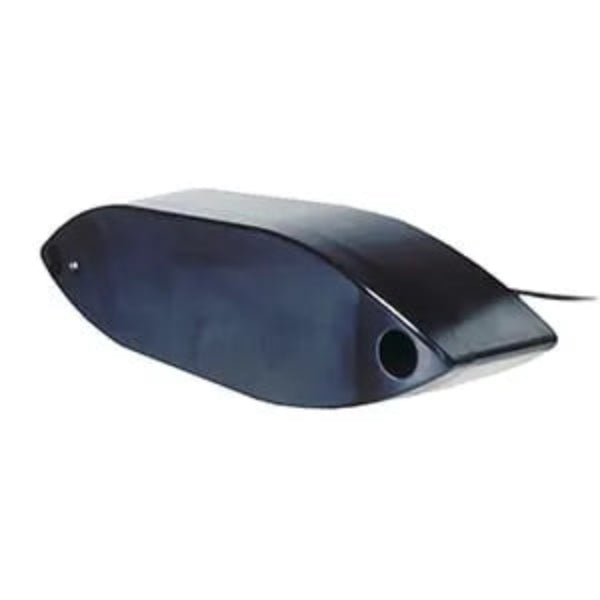
Garmin AIRMAR 509LHW Plastic Thru-hull Mount Wide Beam Transducer with Depth & Temperature
SKU:010-12187-20
- Regular price
- £4,349.95 inc. VAT
- Sale price
- £4,349.95
- Regular price inc. VAT
-
£5,170.00
Flexible Shipping Options - inc. Next Working Day UK Mainland
Click & Collect - available at Morgan Marine, Brightlingsea.
30-Days Free Returns - see our returns policy
Rated - 4.6 / 5 on Google ⭐⭐⭐⭐⭐
Trusted - Marine supplier since 1972
Fast - UK delivery
Garmin AIRMAR 509LHW Plastic Thru-hull Mount Wide Beam Transducer with Depth & Temperature
Garmin AIRMAR 509LHW Plastic Thru-hull Mount Wide Beam Transducer with Depth & Temperature are a high-power, dual-frequency CHIRP transducer designed for superior deep-water and shallow-water fishing performance, providing both depth and temperature data.
Garmin AIRMAR 509LHW Plastic Thru-hull Mount Wide Beam Transducer with Depth & Temperature Key Features
-
Dual-Frequency CHIRP: The transducer operates on two frequency bands:
- Low Frequency: 28 kHz to 60 kHz, delivering superior deep-water performance with a maximum depth penetration of up to 3,048 m (10,000 ft).
- High Frequency: 150 kHz to 250 kHz, providing superior shallow-water performance, bottom detail, and excellent fish-target separation.
- Wide Beam Technology: The high-frequency band features a constant 25° beamwidth, which provides twice the coverage and better visibility of fish in the upper water column compared to standard narrow-beam transducers.
- Power Rating: It is rated for a high power output of 2-3 kW, enabling exceptional performance in demanding marine environments.
- Data Sensing: It provides both depth and fast-response water-temperature information.
- Mounting: Designed for thru-hull installation, it comes with a fairing and installation instructions to accommodate deadrise angles up to 22-25°.
- The urethane housing is compatible with all hull materials, provided correct installation.
- Connectivity: The transducer has wired connectivity with bare wire ends, meaning it requires a compatible sounder module (such as the Garmin GSD 26 or similar high-performance CHIRP sounders) and potentially a connector kit depending on your system.
- Recommended for: Fishing boats and commercial fishing vessels generally 9 m (30 ft) and larger.
- Patented Xducer ID® Technology: Airmar's technology provides the necessary transducer information to compatible sonars, simplifying setup and configuration.
Garmin AIRMAR 509LHW Plastic Thru-hull Mount Wide Beam Transducer with Depth & Temperature FAQs
- hat are the operating frequencies? The transducer operates on a dual-frequency CHIRP system: Low frequency (28-60 kHz) and High Wide frequency (150-250 kHz).
- What is the maximum depth performance? The low frequency provides a maximum depth performance of up to 3,048 m (10,000 feet), while the high frequency has a maximum depth of around 152 m (500 feet).
-
Does it include a speed sensor? No, the
Garmin Airmar 509LHW does not include a speed feature; it only provides depth and temperature readings.
- What is the power rating? It has a high power rating of 2 kW to 3 kW.
- What is the cable length? The cable length is typically 50 feet (approximately 15 m) and comes with bare wires for connection.
- What hull materials is it compatible with? The thru-hull mount is compatible with all hull materials.
- Is it compatible with all Garmin chartplotters? The transducer uses Airmar's patented Xducer ID® technology and is compatible with Garmin sonar modules and chartplotters that support CHIRP sonar, such as the GSD 28 sonar module. Ensure your specific Garmin device is compatible before installation.
- Where should the transducer be mounted? It should be mounted as close to the centre of the boat as possible and away from anything that creates air bubbles or turbulent water, such as strakes, struts, or water intake ports. The included fairing block helps ensure optimal water flow.
- Can I test the transducer out of the water? No, you cannot test the depth-reading ability of the transducer when it is out of the water. Air dissipates the sound waves, preventing the unit from producing a reading.
- How do I clean the transducer? Use a soft cloth and mild household detergent. For severe fouling, you can use a green Scotch-Brite pad, being careful not to scratch the transducer's face.